Common Northwestern Bats
Learn more about our local bats!

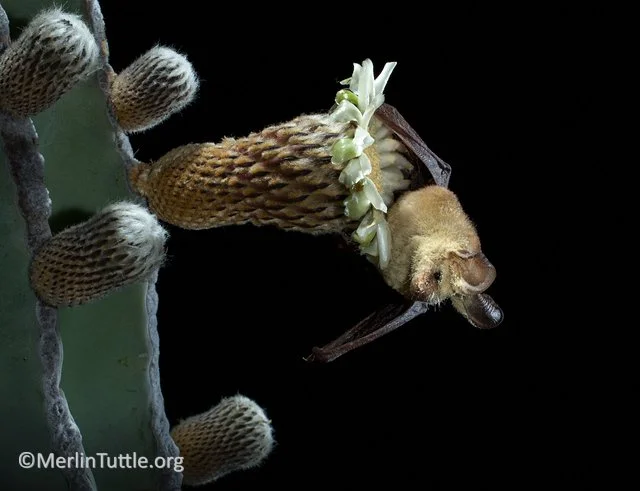
-The Pallid bat (antrozous pallidus) is California’s new state bat as of 2024!
-Very common bat house occupant in most of California
-Varied diet: Pallid bats hunt and eat differently than most northwestern bats, consuming scorpions, cactus fruit and nector, crickets, centipedes, and the more common bat diet of flying nighttime bugs like moths and mosquitos
Pallid Bat

Mexican Free-tailed Bat
- Also known as Brazilian Free-Tailed bats (tadarida brasiliensis), this subspecies forms some of the largest colonies in North America such as Bracken Cave.
-The most common bat house (or actual house) occupant in Northwestern US
-Potentially the fastest flying animal, clocked at 99.4 mph on flat flights

Myotis Species
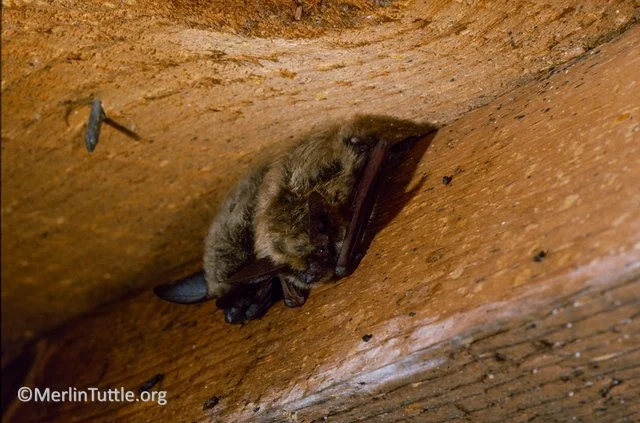
-Little Brown (myotis lucifigus), California Myotis (myotis californicus), Western Small-Footed Myotis bats(myotis ciliolabrum), Yuma Myotis (myotis yumanensis), and Western Long Eared bats(myotis evotus) are all similar species prevalent in California.
-Myotis bats are also common visitors in bat houses across the US, though species vary
-Little brown bats are the species affected most by white nose syndrome(WNS)

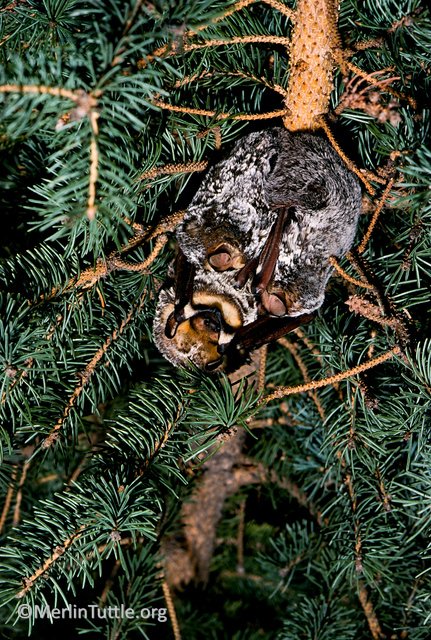
Hoary Bat
- Hoary bats (Lasiurus cinereus)Larger than all aforementioned bats
-Tree-roosting species
-Usually have two pups (twins!)
-The only native land mammal to Hawaii, also migratory and widespread
-The bat species most adversely affected by turbines
-
![A Pallid bat hanging upside down from a Cardon cactus with white flowers on its body, against a black background.]()
Pallid Bat on a Cardon Cactus Flower
-
![A Townsends Big Eared bat (corynorhinus townsendii) hanging upside down with wings spread, drinking water from a shallow stream at night.]()
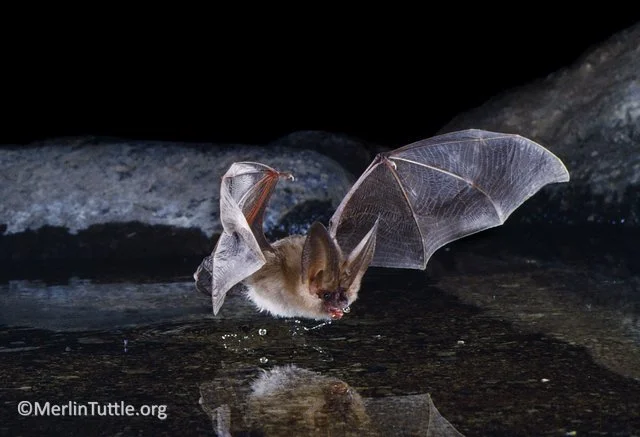
Townsends Big Eared Bat (corynorhinus townsendii)
-
![A Canyon Bat (Parastrellus hesperus) brown and white bat perched on a rocky surface]()
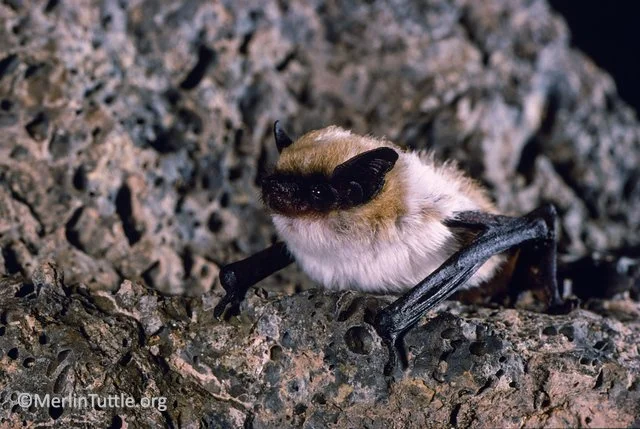
Canyon Bat (parastrellus hesperus)
-
![Close-up of a Western Red Bat (Lasiurus frantzii) small furry bat, with dark eyes and orange-brown fur, against a black background.]()
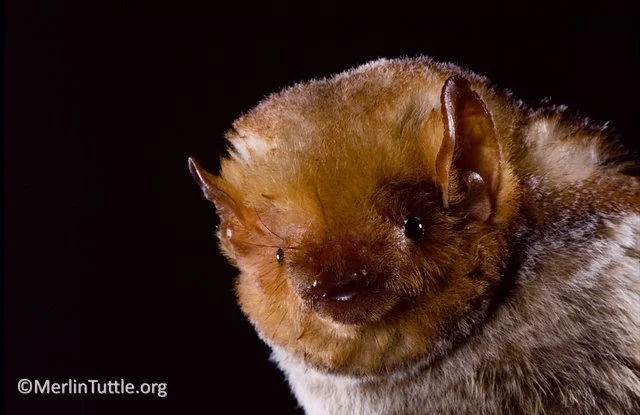
Western Red Bat (lasiurus frantzii)
-
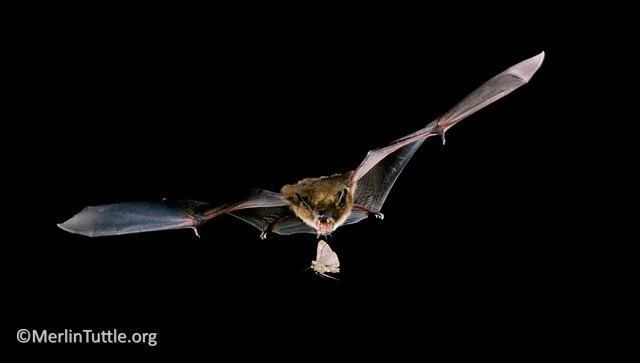
![Close-up of a Big Brown Bat ( Eptesicus Fuscus) in flight against a black background.]()
Big Brown Bat (eptesicus fuscus)
-
![A Pair of western long eared Myotis Bats (Myotis Evotus) resting against wooden beams of a house.]()
A Pair of Western Long Eared Myotis Bats(myotis evotus)
-
![Hoary Bat Roosting with Twin Pups]()
Hoary Bat Roosting with Twin Pups